Redesign of UniBank's mobile account opening flow to reduce abandonment, recover lost leads, and support growth from 300k to 1 million customers in 5 years.
This is a redesigned concept based on practical experience.
Client
Unibank
My role
Product Designer
Deliverables
Concept
Design Direction
Art Direction
Visual Design
Challenge
Abandonment rates hit 40% on some steps. The 54-screen flow was slow and confusing, and dropped leads couldn't be recovered. For a bank targeting 1 million customers, this was a direct threat to growth.
Approach
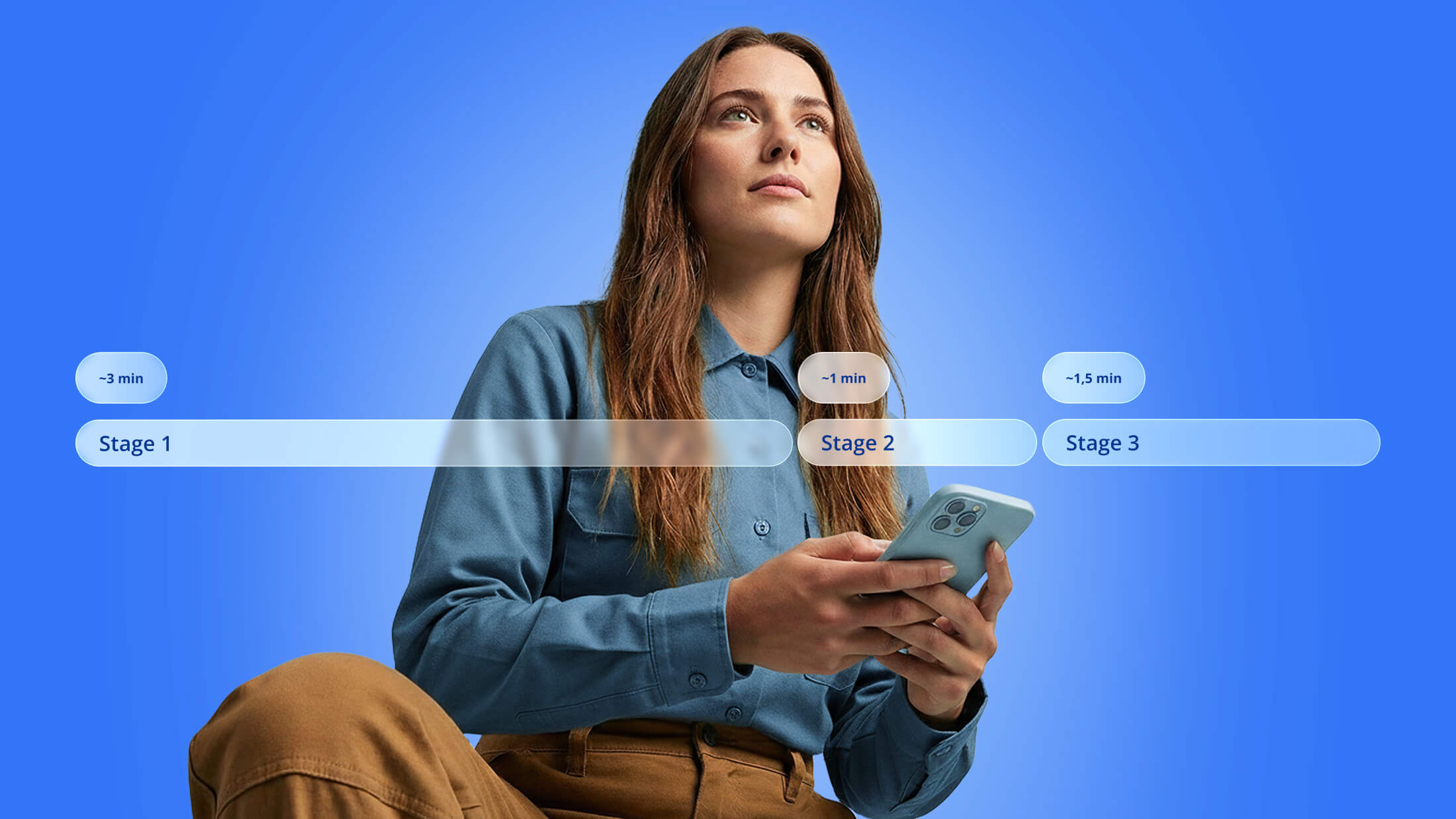
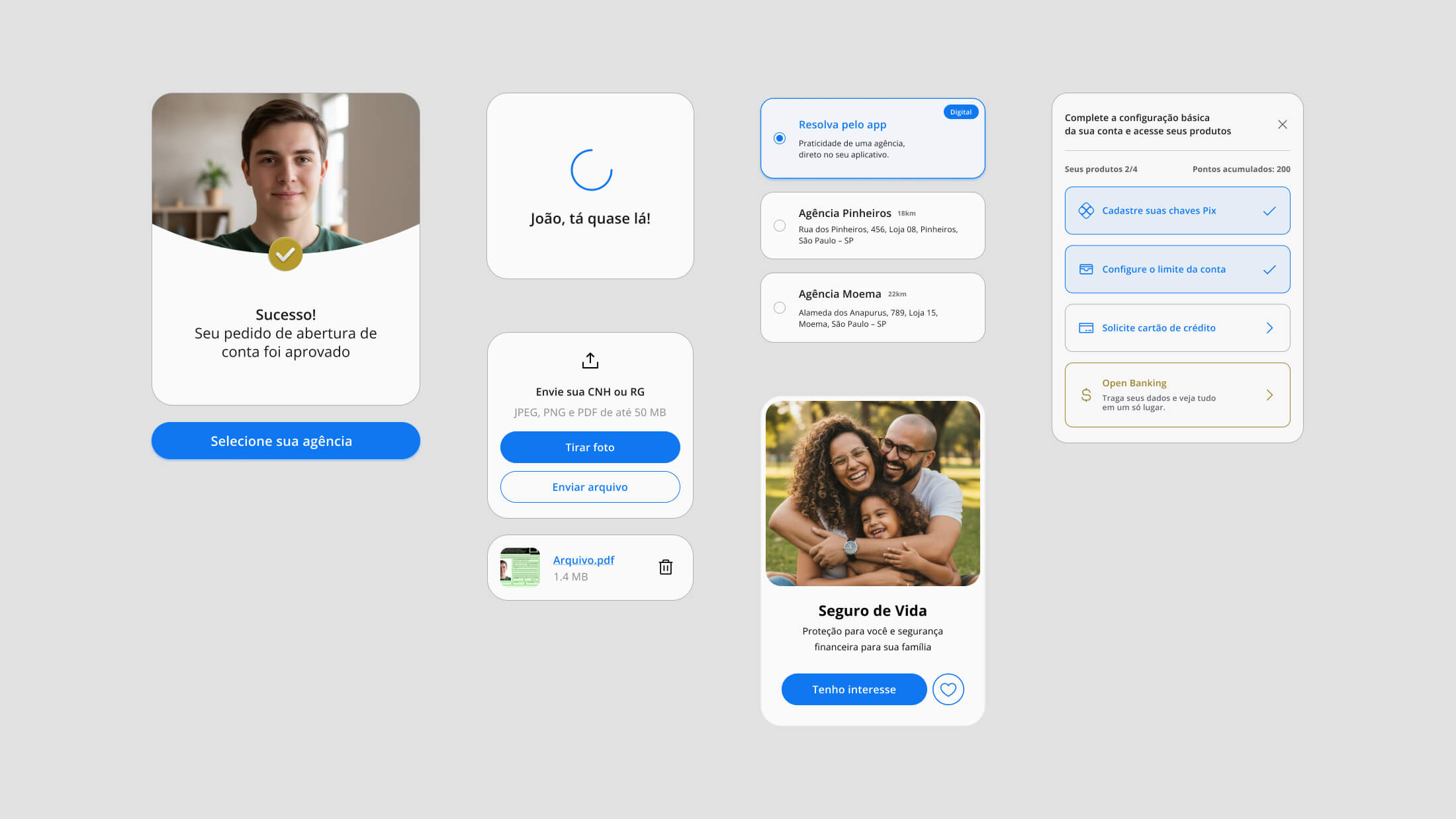
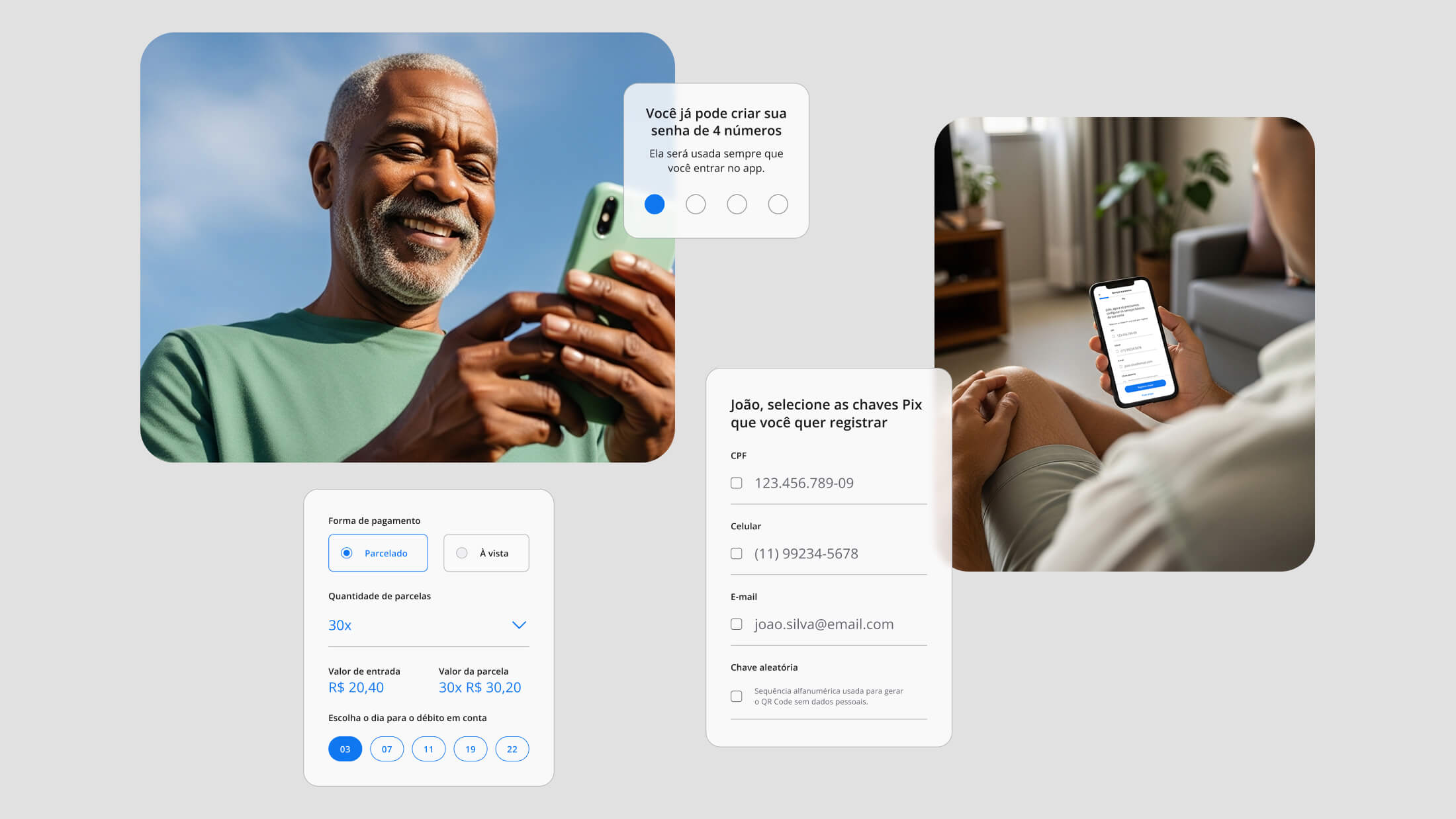
Separating necessary data from bureaucracy allowed for a reduction from 54 to 36 screens. Dividing the registration process into three stages allowed for the return of users who had abandoned the process, and each stage was mapped for specific information verifications, avoiding unnecessary costs for users who were blocked prematurely. In the interface, one field per screen reduced effort and improved readability on smaller devices.
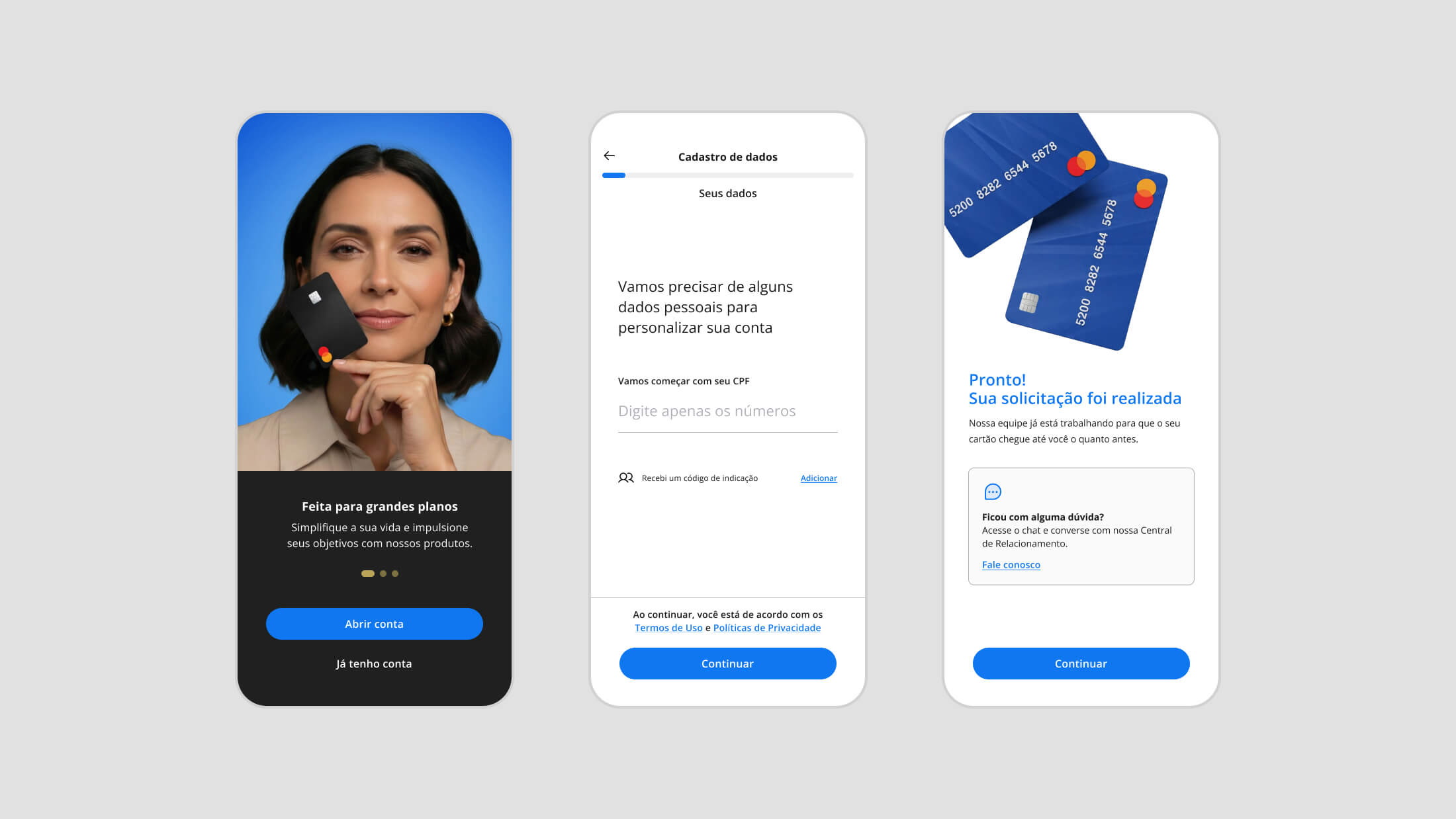
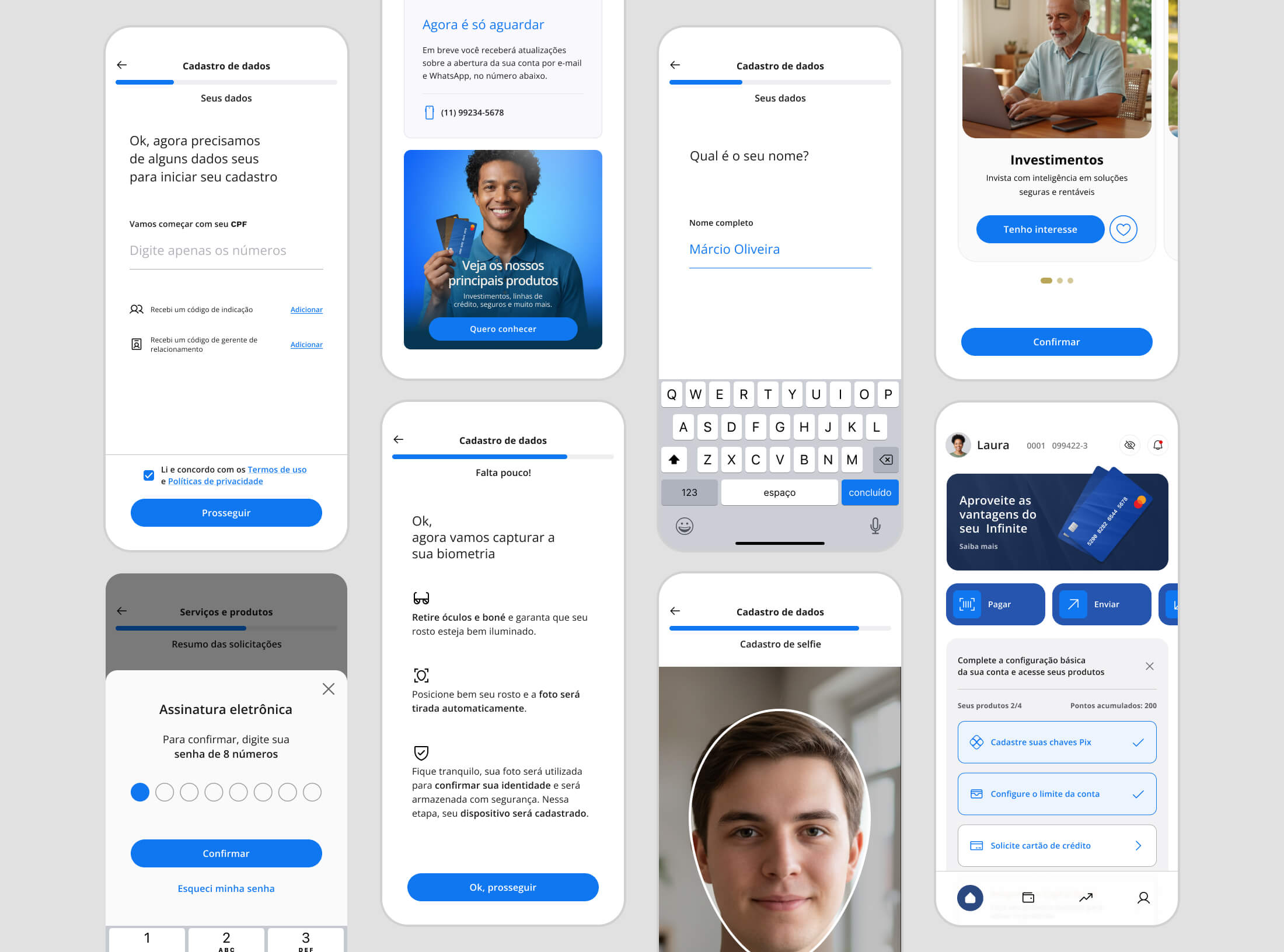
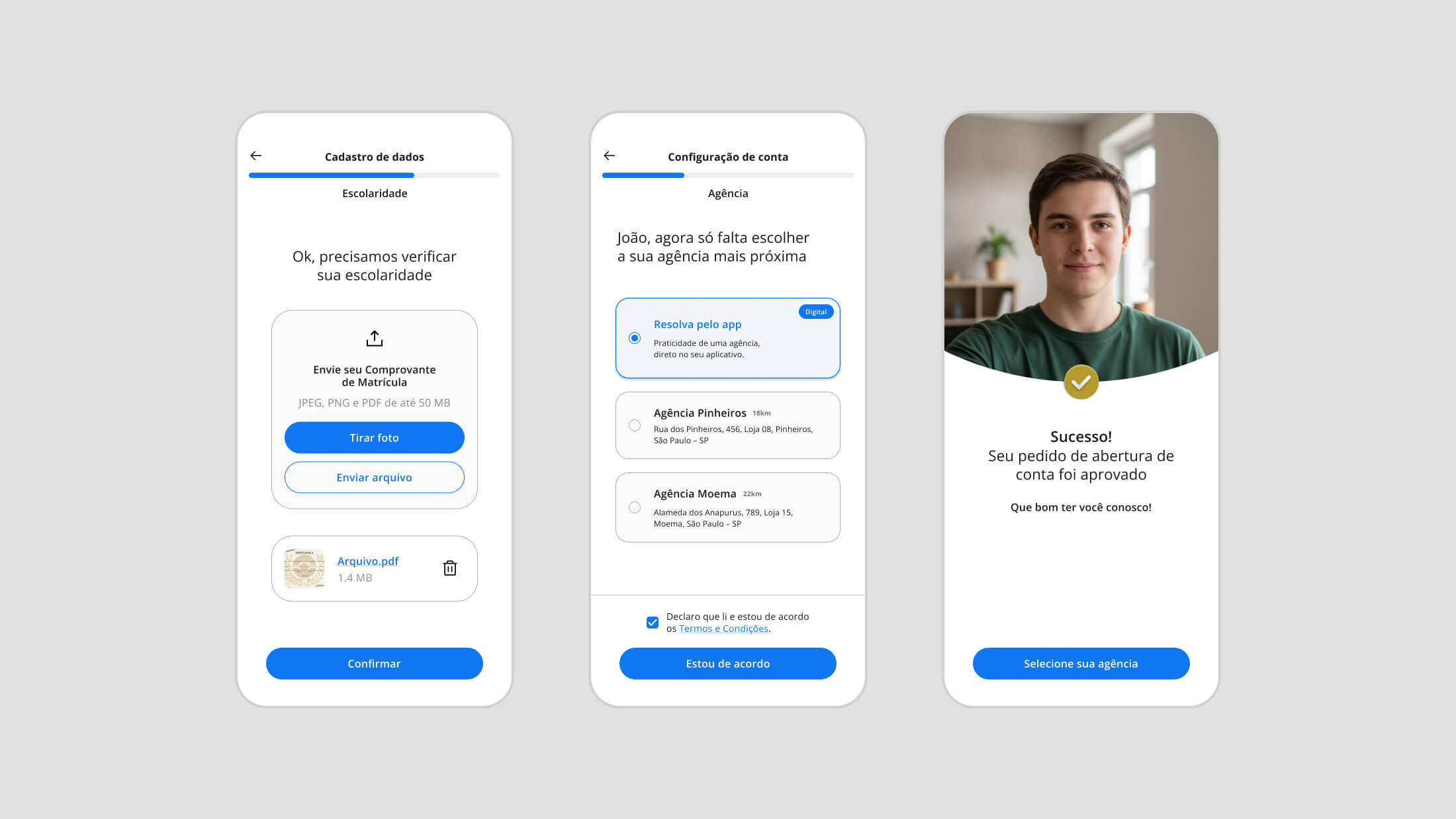
Three-stage registration cut customer approval costs by up to 30%, improved security, and enabled smarter lead recovery.